WPC Decking vs Traditional Wood Decking: A Buyer's Comparison
Compare WPC decking and traditional wood decking for outdoor projects: maintenance routines, appearance, installation details and where each material fits.
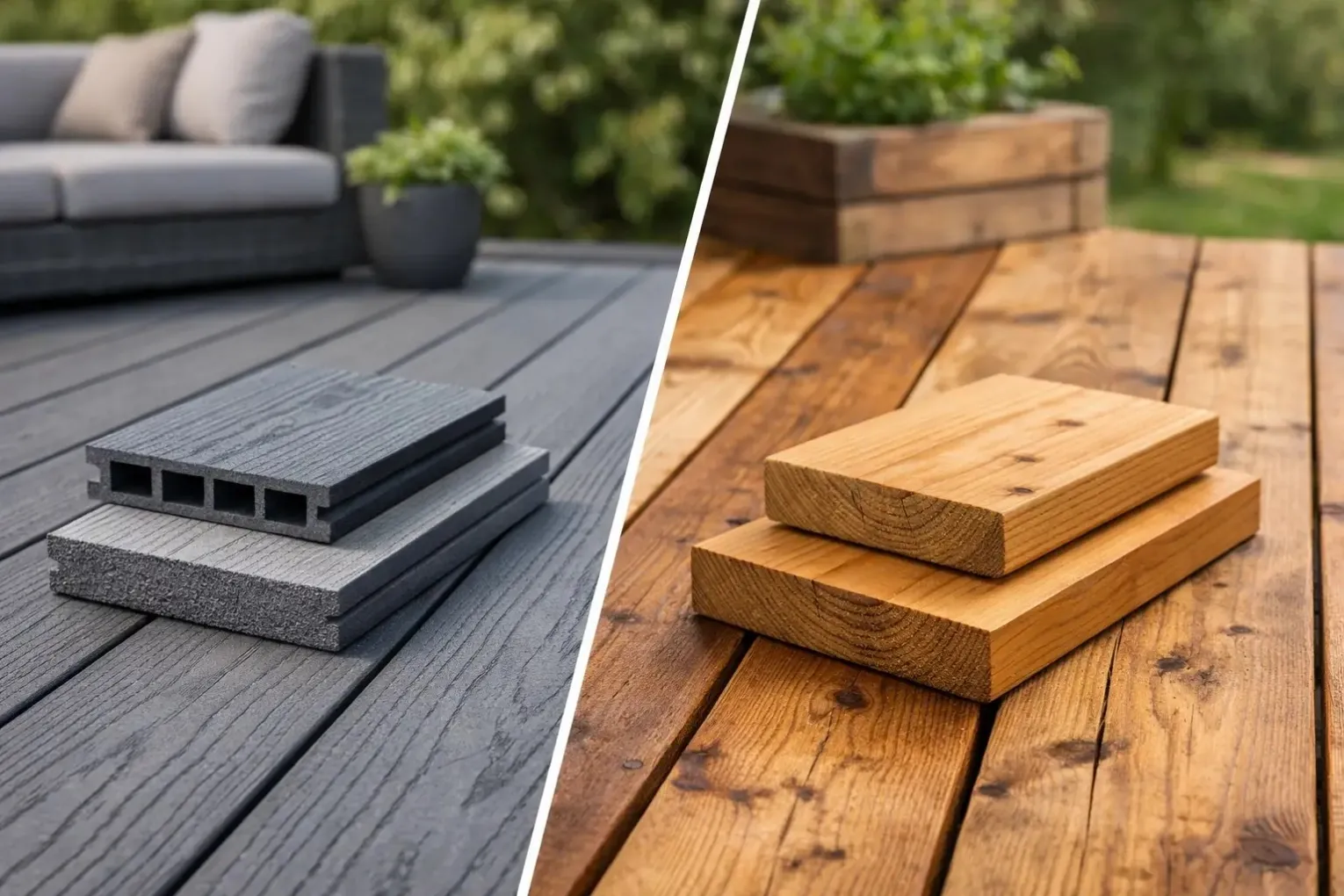
WPC decking is a wood-plastic composite board made from wood fiber, HDPE and functional additives, engineered for outdoor use. Compared with traditional timber decking, the biggest differences are not how a deck looks on day one - both can deliver a wood-like surface - but how the material behaves over seasons of sun, rain and foot traffic. This guide compares the two side by side so importers, distributors and project buyers can decide which material fits their project.
What Is WPC Decking?
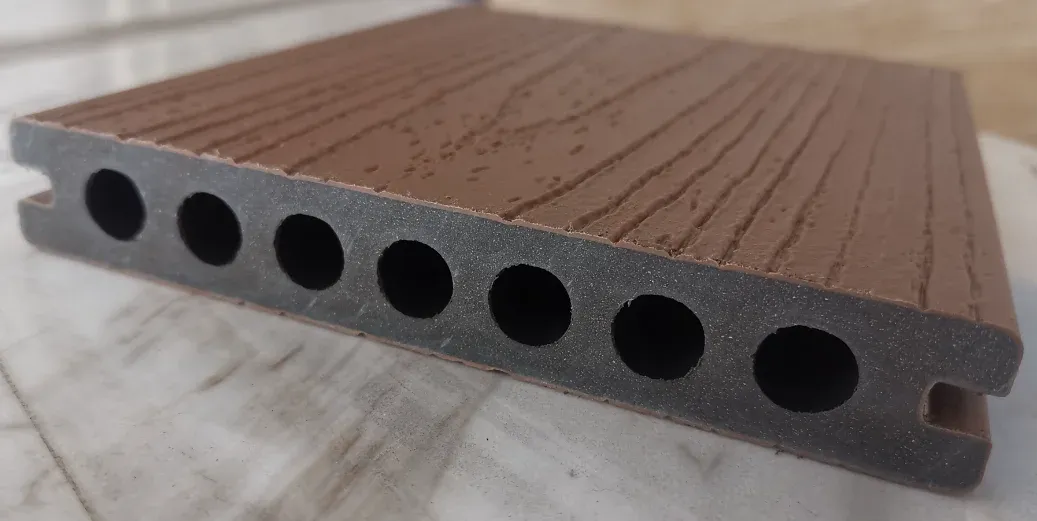
WPC (wood-plastic composite) combines wood fiber with a polymer and functional additives, pressed or extruded into profiles for outdoor floors. The result keeps a wood-grain surface and natural color tones while the polymer content changes how the board reacts to moisture and weather. Manufacturers shape WPC into hollow or solid profiles across multiple widths, with different surface treatments and colors.
MEISEN, for example, engineers its WPC products from wood fiber, HDPE and functional additives for durable outdoor applications, with hollow and solid structures across multiple widths and seven standard colors in the traditional line.
Maintenance: The Practical Difference
This is usually the deciding factor for B2B buyers.
Traditional timber decking is a natural material. To keep it stable and presentable, most projects plan for periodic cleaning, re-staining or re-sealing, and expect surface checks, splits and color drift as the wood weathers. The exact schedule depends on the timber species, coating system and climate.
WPC decking requires no painting or oiling; routine care is cleaning. Because the board is a composite, it does not behave like a solid piece of timber as it weathers. Buyers should still plan for normal outdoor-housekeeping cleaning - no outdoor floor stays clean on its own.
General industry note: maintenance cycles for timber vary widely by species and coating; ask any timber supplier for their specific schedule rather than relying on generic comparisons.
Appearance
Timber offers the natural variation of real wood - grain, knots and tonal shifts that many owners love. WPC offers manufactured consistency: embossed wood-grain surfaces in defined color ranges, so large areas look uniform; replacement boards may vary slightly in colour between production batches, so confirm current samples before ordering matching pieces. Modern 3D embossing presses a deep, realistic grain into the board surface, and co-extrusion lines add a protective layer with the color bonded into the shell.
If a project specification demands the authentic irregularity of natural timber, wood may still be the right answer. If it demands consistent color and texture across hundreds of square meters, WPC has the structural advantage.
Outdoor Suitability
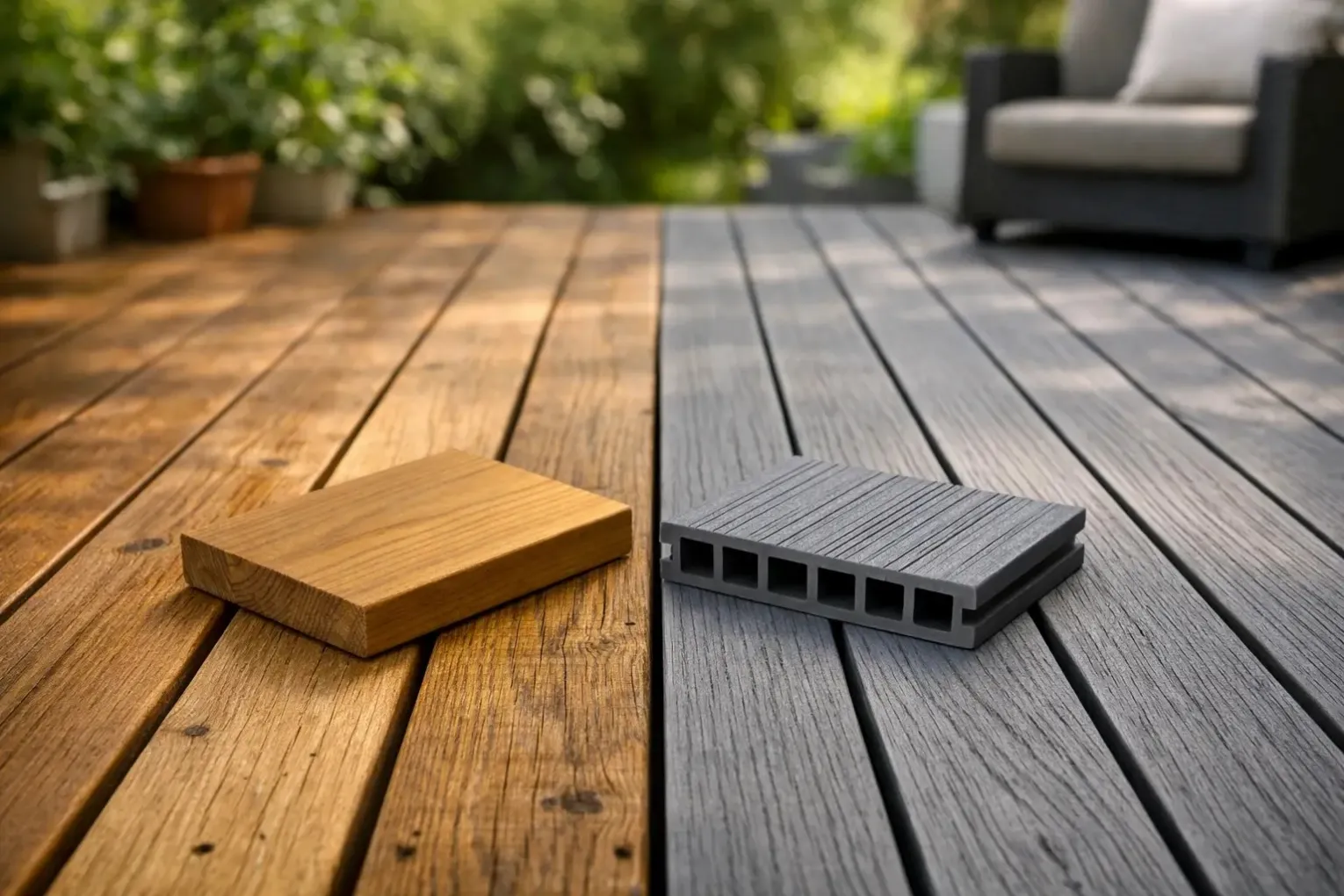
Both materials serve outdoor decks; they simply age differently. Timber weathers visibly and needs its protective coating renewed. WPC is designed for exterior use in changing weather and keeps its color system defined by the manufacturer - for example, MEISEN's traditional line offers seven standard colors (Natural Wood, Copper Brown, Coffee, Cedar, Dark Coffee, Dark Grey, Black) with custom colors available on request.
For site conditions - ground contact, poolside splash zones, coastal air - ask both material suppliers for guidance specific to the installation rather than relying on brochure claims.
Installation Considerations
Both systems build on a joist substructure. The difference is fixing:
- Timber is commonly screwed or nailed directly, with pre-drilling to manage splitting.
- WPC hollow profiles are typically fixed with hidden fasteners - clips on the substructure - so no screw heads show on the walking surface, and gaps stay consistent for movement and drainage.
For MEISEN profiles, installation follows a hidden fastener system with clips and joists; fixing clips and starting clips can be supplied with your order, with the final scope confirmed in the quotation.
When WPC Fits - and When Wood Still Fits
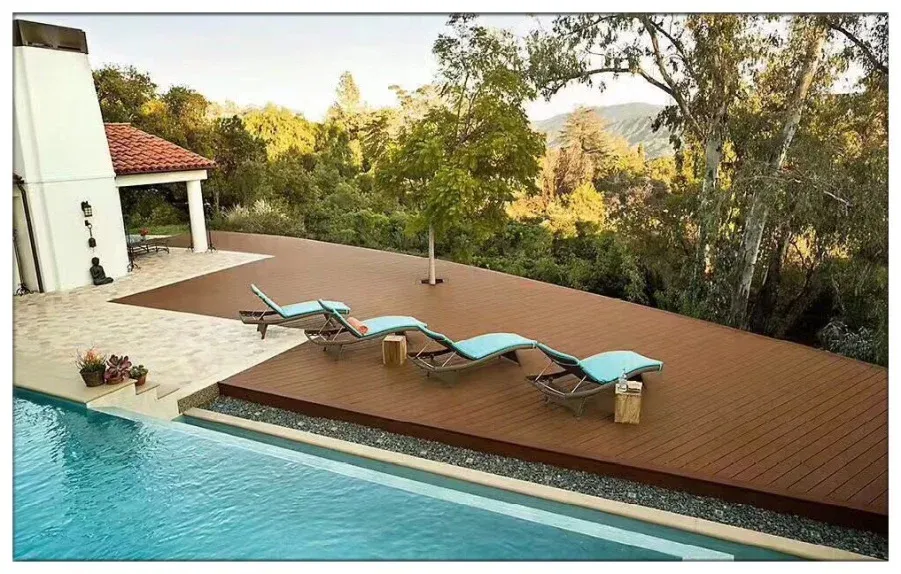
WPC is often the fit when a project wants a wood-look deck with defined colors, hidden fixings and a low-maintenance surface - typical for residential decks, commercial walkways and landscape builds.
Natural timber may still be preferred where the specification calls for the authentic character of solid wood, a specific timber species, or a project culture that expects traditional carpentry on site.
There is no universal winner. Compare the two against the project's maintenance budget, visual specification and lifecycle expectations.
How MEISEN Can Help
MEISEN supplies WPC decking in traditional, co-extrusion and 3D embossed lines - hollow and solid profiles in sizes such as 140 x 25 mm and 145 x 25 mm. If you are weighing WPC against timber for a project, send us the application, target market and estimated quantity and we will help you compare options.
FAQ
Is WPC decking real wood? No. It is a composite of wood fiber and polymer (HDPE with functional additives). It is finished with wood-grain textures, but the board itself is an engineered material.
Does WPC decking need staining or painting? No painting or oiling is required for MEISEN WPC decking. Routine cleaning is all the surface asks for.
Is WPC decking more expensive than timber? Prices move with species, profile and market. Compare quotations for the same project scope rather than generic price lists - and include timber's ongoing coating costs in the comparison.
How long does WPC decking last? High-quality WPC decking is engineered for long-term outdoor use, and its service life depends on the product type and application. Actual service life can vary with material and product construction, installation quality, environmental exposure, usage conditions and maintenance. For a specific project, buyers should review the technical information and installation requirements for the selected decking system.
Can I see color samples before ordering? Yes. MEISEN offers seven standard colors in the traditional line and a color card; custom colors are available on request.
Discuss Your WPC Project
Need help selecting a profile, surface or color? Contact MEISEN with your application, target market and estimated quantity.